“A. Edward Newton tells a story of Oscar Wilde at an English house party. Pleading the necessity of working while the humor was on, he begged to be excused from joining the other guests. In the evening his hostess asked him what he had accomplished. ‘This morning,’ he said, ‘I put a comma in one of my poems.’ Surprised, the lady inquired whether the afternoon’s work had been equally exhausting. ‘Yes,’ said Wilde, passing his hand wearily over his brow, ‘this afternoon I took it out again.’” (from Edward Weeks’ The Trade of Writing as quoted in The Poetry Home Repair Manual by Ted Koosier).
This droll anecdote PERFECTLY captures the agony of writing poetry. How many times have I LITERALLY added commas that I removed later? How many times have I repeatedly added or removed words? How many times have I felt convinced a line needed to break in one place only to be convinced (hours later) that it needed to break in another place (and what a troglodyte I was for thinking that other line break was right) only to decide the next day the real crime was not seeing how perfect the original line break was after all???
If “Poet” had a job description, “Neurotic over-thinker” would be one of the minimum qualifications. I’ve written before about process, the many drafts a poem can go through, and poems that take YEARS to finish. In the spirit of poetic agony, I thought I’d post “Crux”—a poem about agony that took well over a decade to finish. For years, I couldn’t get past the first two stanzas. But sometimes you just have a feeling about a poem; you keep taking it out, trying again, re-thinking, dripping blood while searching heaven for an answer…then…one day…for no apparent reason…the solution hits you like a water balloon to the face. “Crux” is from my first book, The Wind and the Shadows.
Crux

Here—
where clouds overhead
and crowds at your feet
thicken into an untimely
darkness—
you can’t tell
miracle from murder,
blessing from curse,
God from your enemy.

Here—
where vultures overhead
and priests at your feet
circle, waiting for a
body—
you can’t tell
mystery from mockery,
life from death,
wine from blood.

Here,
beams, bones,
paths, purposes,
swords and fingers
cross;
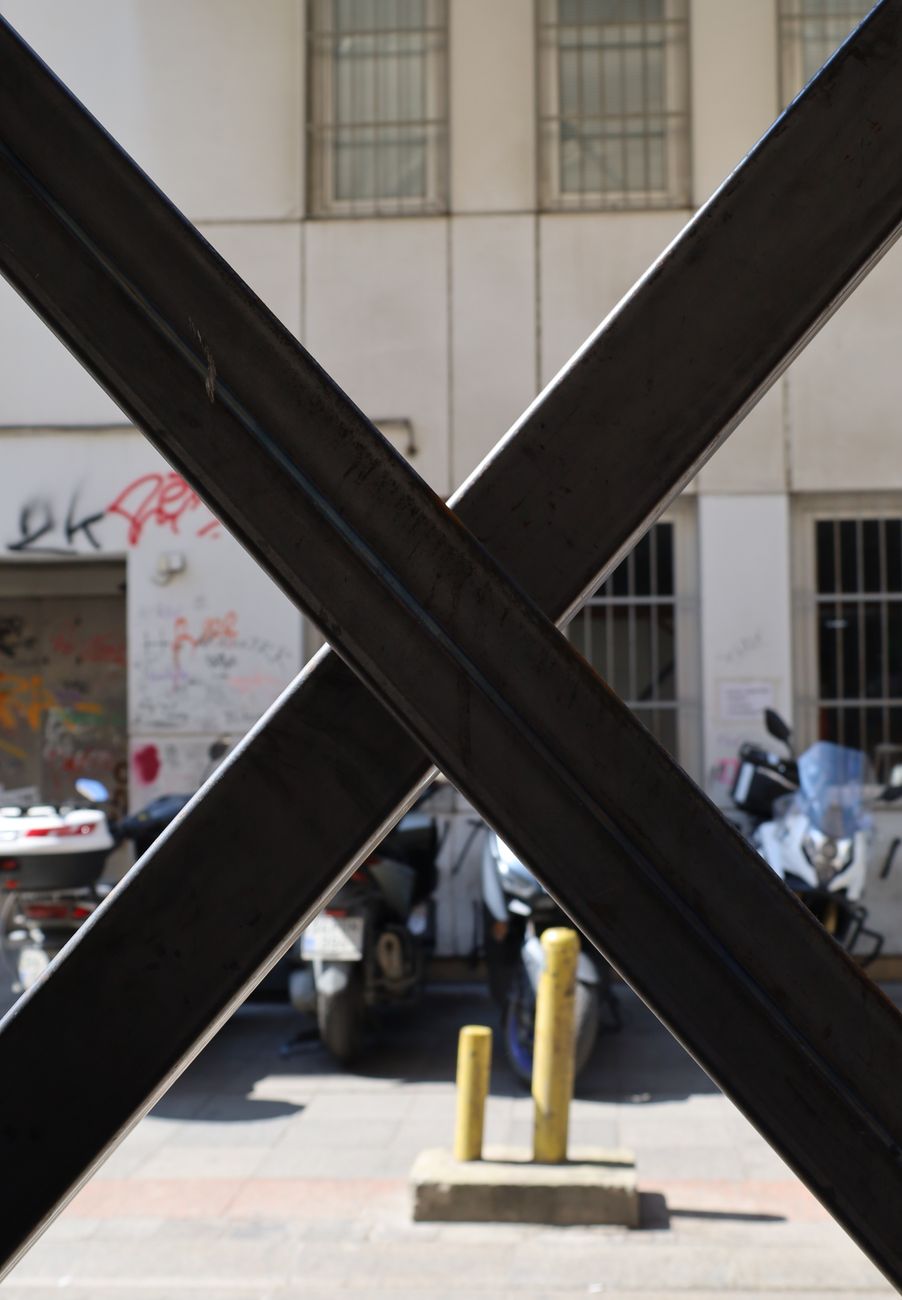
“X” marks the spot
where you hang,
and
all you know is

you are
here.

