There are many poets I love to read. But a handful go further and inspire me to write. Gerard Manley Hopkins is one of these. I had read a some of his poems over the years, but decided to pick up a book of all his poems. My heart thrilled to so many things as I read. Hopkins was a Jesuit priest so often wrote about Jesus and spiritual themes. His poems are full of lovely sound—alliteration, rhymes, and lively turns of phrase lead the reader in a literary dance. Like Shakespeare and Lewis Carroll, he also coined some words. This is to say nothing of the striking imagery he employs—essential to any good poem.
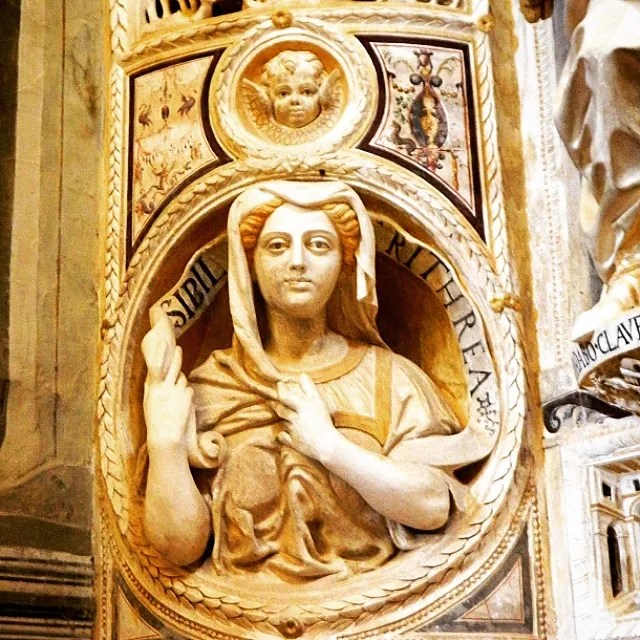
One poem I had not read before became a new favorite—“Spelt from Sibyl’s Leaves.” Sibyls were prophetesses in Greek literature and were sometimes “adopted” by Christians as pagan witnesses of Christ. Apropos of the title, the poem uses the coming of night to image the end of the world.
I’m not gonna lie—this poem is difficult and unusual. I had to read about Sibyl, look up words (several of which Hopkins made up), and dissect some of the images. But it was SO worth the effort!
“Spelt from Sibyl’s Leaves” is a sonnet, but atypical since it employs sprung rhythm and octameter (eight feet per line instead of the more typical five). Hopkins fills this large structure with dense images musically delivered. Take this sample from lines 9-11:
Only the beak-leaved boughs dragonish ' damask the tool-smooth
     bleak light; black,
Ever so black on it. Óur tale, O óur oracle! ' Lét life,
     wáned, ah lét life wind
Off hér once skéined stained véined varíety ' upon áll on twó
     spools;
Sometimes hyphenated words cross lines—very unusual for poems but effective in this case:
For earth ' her being as unbound, her dapple is at an end, as-
tray or aswarm, all throughther, in throngs; ' self ín self
     steepèd and páshed – quite
Disremembering, dísmémbering, ' áll now. Heart, you round me
     right
With: Óur évening is over us; óur night ' whélms, whélms, ánd
     will end us.
In the example above, astray crosses lines as “as-tray,” allowing “as-“ to rhyme with “us” in the last line while “quite” and “right” form the rhyme in the middle two lines. It’s a novel and creative solution that highlights Hopkins’s often playful disregard of form. Instances like this give Hopkins’s verse a childlikeness I find life-giving since it reflects God’s childlike freedom.
I will not post the whole poem here because I can’t do it as effectively as The Poetry Foundation’s site. But I would encourage readers to take a few minutes to read, puzzle over, and enjoy this poem: https://www.poetryfoundation.org/poems/55688/spelt-from-sibyls-leaves

