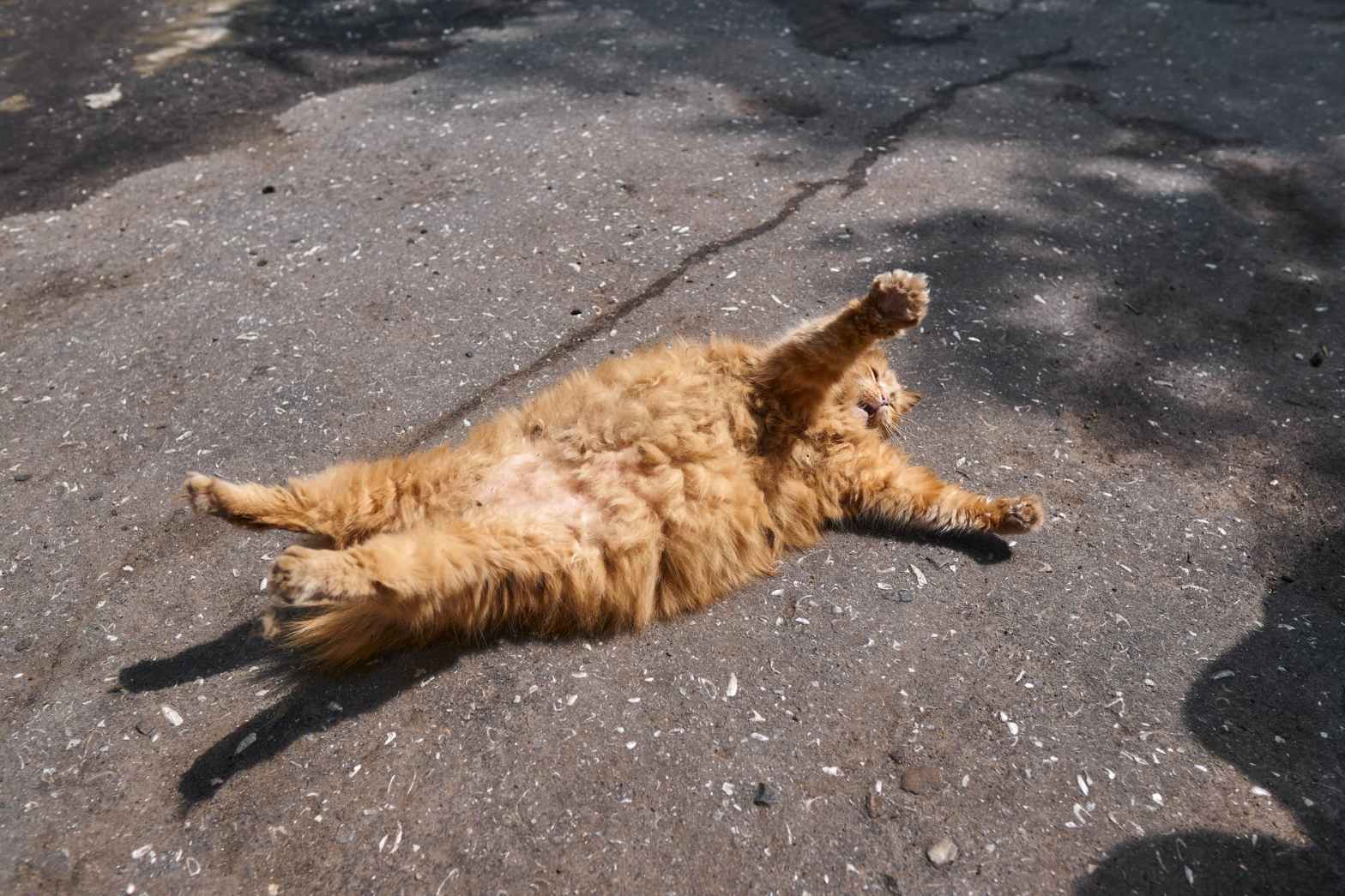
In my family, we’re cat people. We love each cat’s quirky personality, and that they’re often walking contradictions: graceful and dignified one minute, neurotically spazzing out the next; desperately affectionate, then callously indifferent. If I could get one to wear a mood ring, what a light show that would be! Since cats are in myContinueContinue reading “Fat Cats”
Author Archives: mrteague
The Difference Is the t

As a Christian, Jesus is a very real presence in my life and writing. Spirituality isn’t the only subject I write about, but it is the backdrop for everything I think or pen. Christians believe every person born has good and evil hopelessly combined within. It is like a cup of water that someone hasContinueContinue reading “The Difference Is the t”
Published Again!

I am happy to say that another of my poems will appear in the journal Better than Starbucks this August! The past couple months, I found myself writing a number of haiku and tanka, poetic forms that originated in Japan. Better than Starbucks has a section of their journal dedicated to haiku, so I decidedContinueContinue reading “Published Again!”
Richard Cory

Sometimes, a thing crashes through the skull and lodges in the brain with such force it becomes a lifelong interest. Other interests are like a person you see regularly out of circumstance until, one day, you realize you love them. While I was aware of poetry through school or family for many years, there wasContinueContinue reading “Richard Cory”
Fib(onacci)

Last year, my daughter was learning about the Fibonacci sequence. This is a sequence of numbers in which each succeeding number is the sum of the previous two numbers: 1, 1, 2, 3, 5, 8, 13, 21, and so on. Mathematically, this can be used to describe a spiral: Ideas for poems come to meContinueContinue reading “Fib(onacci)”
Valentine’s Day 2017

This May, I will have been married 23 years. Over the years, I’ve written a number of poems for my wife. (Can you really be a poet without a few love poems lurking about? LOL). When my wife and I were married, we chose to use the traditional vows. While these might seem hackneyed toContinueContinue reading “Valentine’s Day 2017”
Wildfires

The past 20 years, horrific wildfires seem to have become the rule rather than the exception in the United States. My home state of Washington has lost hundreds of thousands of acres to fires. I live in a valley. During fire season, smoke often floods our valley and is gets trapped by our surrounding hills.ContinueContinue reading “Wildfires”
Look, Cat
In a previous post, I shared that I decided to be more intentional about writing and reading poetry in 2020. Many poetic forms have intrigued me over the years, so investigating poetry more has led me to new forms. Writing poems in different forms has been a way to challenge myself. Luc Bat is aContinueContinue reading “Look, Cat”
For Sale

Robert Lowell (1917-1977) is a poet I became acquainted with by accident. I was trying to find a hymn I thought was by Robert Lowell—“The Angel’s Song”—only to realize later it was by Robert Lowry. Lowry is famous for hymns like, ”Nothing but the Blood of Jesus.” Lowell, as I came to learn, was aContinueContinue reading “For Sale”
Shapely Poems

Shape poems or visual poems arrange text to form pictures. With some shape poems, the picture formed by words is more important than what the words say. Others use the shape to emphasize the verbal content. One of the first shape poems I read is also one of the best known. “Easter Wings,” by GeorgeContinueContinue reading “Shapely Poems”
 A Wandering Minstrel