This week, I’ll attend a funeral for one of my uncles. In 2024, I attended two funerals for two other uncles. I have lost relatives before. But losing these uncles has caused a shift in my life: of the adults I knew while growing up, half are dead.
This has brought a different kind of grief, a compounded grief. Besides the loss of family members whose company I enjoyed over the years, I am mourning relationships that have been foundational to me as a person. This means finding another foundation where I can resettle and rest myself.
Fortunately, I don’t have to look hard for that other foundation. God is the most firm foundation there is. I just need to move my “home” from the crumbling foundation of family to God. Still, moving a house to a new foundation puts a lot of strain on the structure, and I certainly feel this to my core.
Below is a poem I wrote in 2024 after attending a funeral for one of my uncles. It is in my fourth book, The Anonymity of Waiting.
Looking Down the Road

My uncle’s celebration of life
was at the clubhouse of the senior community
where he lived his last couple years
in a manufactured home.
It was, “a nice little place,” as people said.
But he was an architect;
the light gray box where he hung his hat
was a shadow of his previous house,
whose three stories and sprawling decks
sat on a hill.

The clubhouse was barely 500 square feet
but held the 15 or 20 of us
who came to cry, trade stories, or stand in quiet huddles
looking at the celery, strawberries, and cookies
piled awkwardly on the tiny plates in our hands.

My other uncle, who used to throw the football around with me,
sits talking with my mom.
They are the last of five siblings.
He’s pale, washed out, like an over-exposed photo.
The ridges of a skull look back at me
through the thinning skin of his face.

My cousin and I do the math
and find we’re both 50.
We remember a time his dad drove some of us
into the hills by grandma’s to shoot a .22.
Then we talk about the jobs we’ve worked for 15 years—
my cousin in manufacturing, me in social work.
My cousin observes that younger workers
seem to hop jobs every few years, and I agree.
Then he laughs beneath his Dallas Cowboys hat
about how we’ve become the old farts
complaining about younger people.
“I guess every generation’s the same,” he winks,
and we both smile.

As the afternoon wears on,
the room gets warm, stuffy, and close.
I get up to leave and realize
I’m blocked in by a black Honda.
No one knows whose car it is, so I sit back down,
checking the clock and the parking lot
every few minutes.
Eventually, I notice it’s gone and say my goodbyes.

At my car, I look down one of the senior community streets,
which aren’t wide enough
to accommodate traffic and parked cars.

Everything in me wants to get in my car and go.
But my eyes are drawn to the end of the street,
where the curbs narrow to squeezing tweezer tips
before vanishing into the shadow
of the hills crowding the town.

After a minute, I notice my chest heaving;
my heart thuds like a fist
and shakes the cage of my ribs as I stand there,
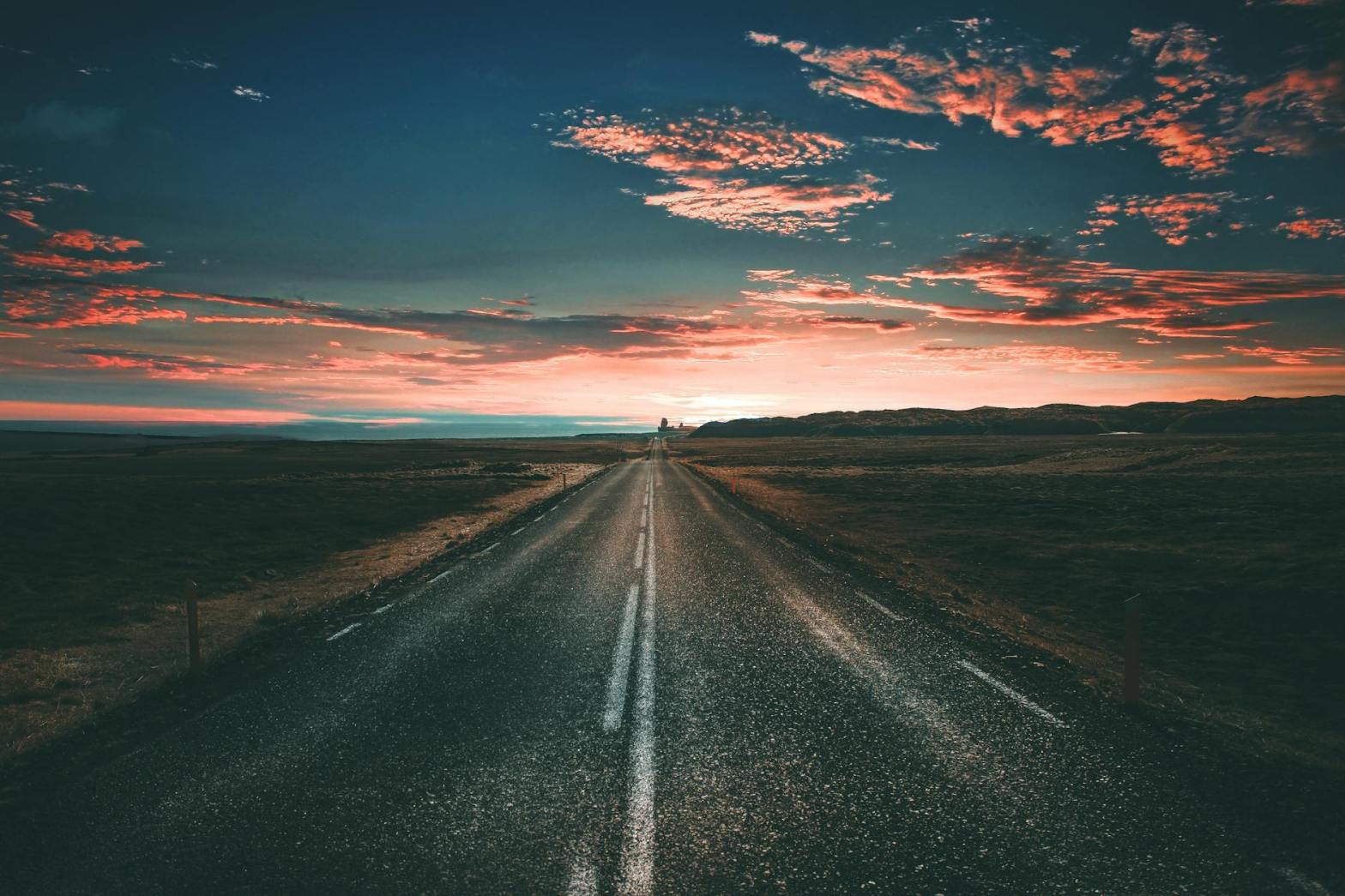
looking down the road,
the warm June air clinging to my face
like a burlap hood.
 A Wandering Minstrel