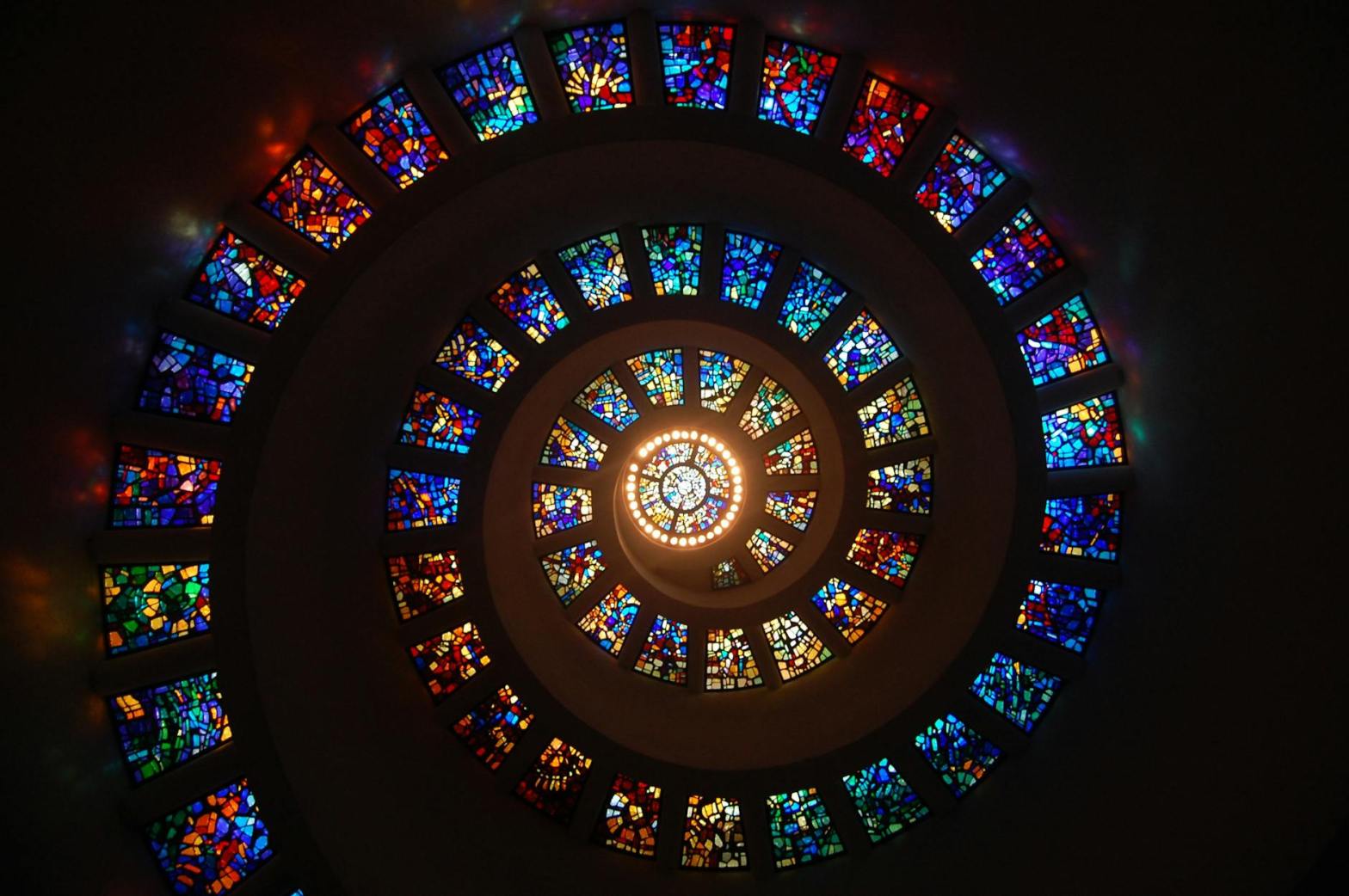
I’ve been learning about a new poetic form: the pantoum. This is a Malaysian form consisting of quatrains (four line sections or stanzas); the second and fourth lines in one stanza become the first and third lines of the following stanza. The first and third lines of the first stanza are then repeated as the second and fourth lines of the final stanza. Often, these lines are switched so the first line of the first stanza becomes the last line of the last stanza, and the third line of the first stanza becomes the second line of the last stanza. There is no set number of stanzas. The template looks like this:
A
B
C
D

B
E
D
F

(Final quatrain)
G
D
H
A
Confused yet? If you really want to drive yourself crazy, you can also add a rhyme scheme, which is what I did when trying my first pantoum. The repeating lines and rhyme scheme create so many limits that writing within this form is—I’m not gonna lie—a bit agonizing. Beyond that, you have to come up with lines that repeat yet move the poem forward (and still make sense). It’s a headache, but one poets enjoy. (Ever hear the phrase “a tortured artist”? Now you know why 😆).
As you can imagine, pantoums have a cyclical feeling and sound when read. Of the pantoums I’ve read, I found one particularly effective: “Another Lullaby for Insomniacs” by A.E. Stallings. If you have a minute, this short poem is well worth the read and will give you a good sense of a pantoum. After reading this poem, I went on to pick up Stallings’s book, Like. I hope to post a poem from that book at some point.
 A Wandering Minstrel
One thought on “The Pantoum”